Showing posts with label withoutabox. Show all posts

Thursday

Time to Submit your DIY film and how to distribut your DIY film

Hello DIY Filmmakers! 
We're coming to the end of the time period to submit your film.  It's also going to be the last time the DIY Film Festival is set up through WithoutABox, so if you want to submit your film to our festival, please do so now, without any delay.  We will begin working through the entries in the beginning of March, by mid March we'll announce the finalists, and then after that the winners of this year's DIY Film Festival.  Yay!
We ran across this article about DIY Filmmaker Jim Cummings and his journey to Sundance with his film "Thunder Road" and despite not calling this a DIY film or experience, it clearly is one.  So enjoy this article, as you think about ways to market and sell your film!

******
NOVEMBER 6, 2018 (From the MUSICBED blog)
Thunder Road
There’s maybe no one more qualified to be leading the charge for independent filmmakers these days than Jim Cummings. Since we talked to him a year ago, he’s gone on to make his first feature, Thunder Road, and win the Grand Jury Prize at South By Southwest. The film is currently sitting at 97% on Rotten Tomatoes. It’s already generated $500,000 in ticket sales in France alone. Maybe most notably, though, he and his crew made it on their own — no major studio, no executives, no distributors. It’s an independent film in the truest sense of the word. Let’s just say, he’s fired up about that:
“It’s all bullshit — all of this stuff that says in order to make a movie you need a million dollars, this union crew, all of that stuff. It’s all scare tactics to keep people out of the club,” he told us. “You just have to realize there is no club.”
Thunder Road’s success as an independent film, though, isn’t dumb luck. It may have launched like a rocket during its premiere, but even rockets need guidance. It turns out Jim is not only a talented director and actor; he’s also a good marketer. He had a few things to say about how independent filmmakers are fully equipped to make their feature film right now, from getting a crew together and generating funding to self-distribution.
We caught up with Jim to talk about what he’s been up to over the past year, which happens to be disrupting the film industry a bit. So, if you’re a filmmaker who’s ever dreamed of releasing a feature film, listen up. Jim just did and here’s what he has to tell you:
Getting a Crew
Where did you start after you had a script?
I spent six or seven months going to all of the people I thought would be helpful; people who had turned successful short films into successful features. I found that transition doesn’t exist as much anymore, with this convergence of everyone becoming their own movie studio. The democratization of digital distribution and just a number of things have contributed to the ladder not being sent back down from people are making short films.
It took me a while to get my bearings and a good friend of mine, Zach Parker, read the script and was a huge fan of the short film. He said, “I want to do the Linklater thing and go make five features in Austin.” And after reading the script, he said, “I want this to be the first one. Option it to me.” He’d never produced a feature before, but he was so determined.
Was there some uncertainty there?
To be entirely honest, I was uncertain until we sat down for the second time. I’d been burnt before by people saying they’ll pay me to write a screenplay or whatever. I didn’t know what his intentions were. He and I went to a cafe because he was asking me to sign the contract for the option — it was for a dollar [laughs].
Then he started talking about Bruce Springsteen and what Thunder Road means — in terms of the script, not just the song. He said, “Thunder Road means how much you will do for your children; that’s what it’s about.” Just the way he said it, it was one of those moments you realize you totally get along with someone because you’re both accidentally crying in public, having to look away and pretend like you’re not noticing the other person crying. I left that meeting immediately thinking, This is the guy. He’s very adamant about it, just like me.
Now, any time I’m bringing on a cast or crew member, it’s not about their credentials. It’s their talent and enthusiasm. Those are the only two hiring requirements. It doesn’t matter how long your IMDB page is. If this movie really means something to them, they’re hired. Everybody on set was like that. Everyone had lost somebody or wanted to make something about this character going through hell.
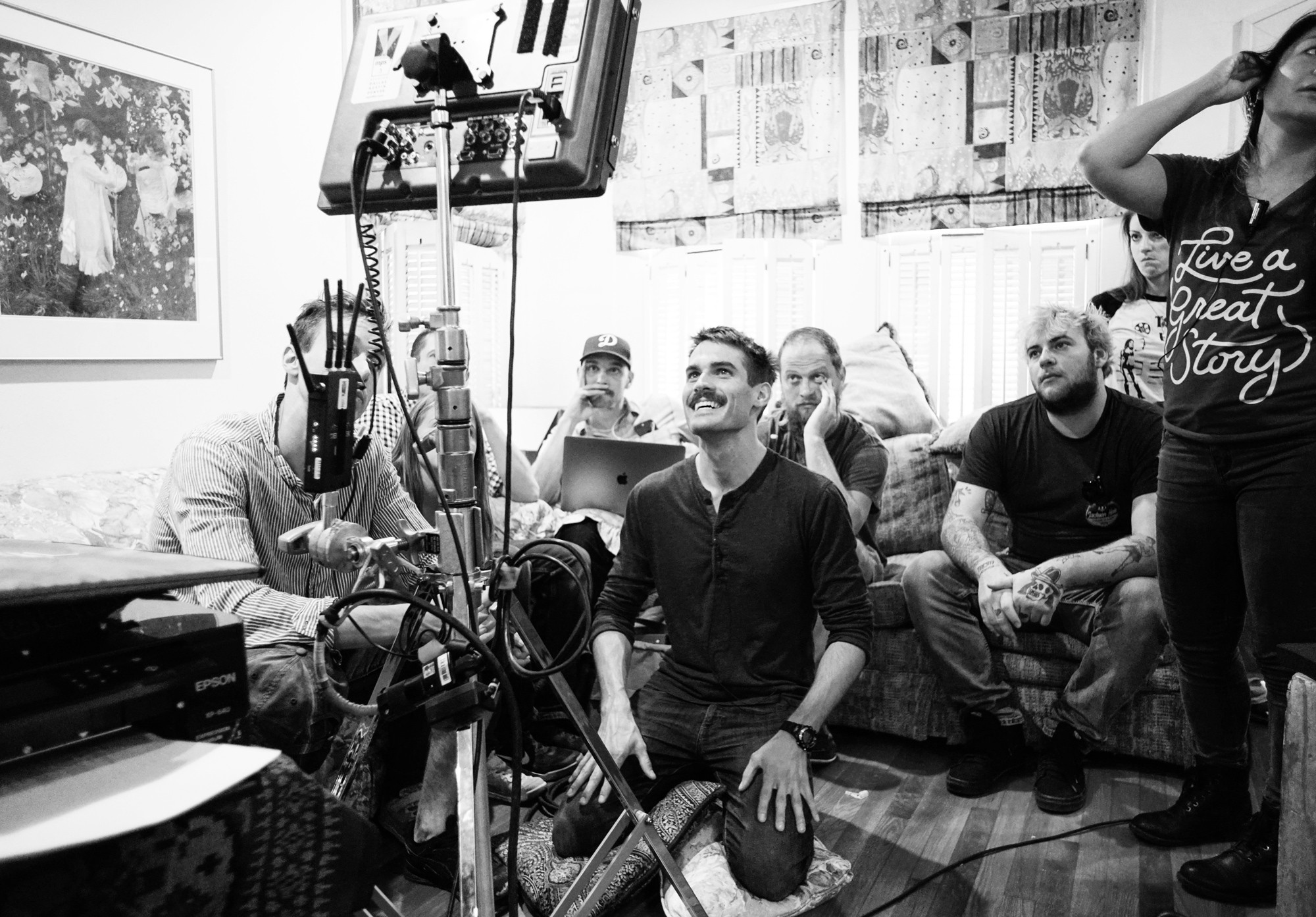
Any time I’m bringing on a cast or crew member, it’s not about their credentials. It’s their talent and enthusiasm. Those are the only two hiring requirements. It doesn’t matter how long your IMDB page is.
Did that involve a significant amount of vision casting on your side?
Well, a big part of the film was us re-shooting the short film — and we shot it 18 times in one day. So, that humiliating dance and big performance, all that, people were seeing how much I was torturing myself.
I started the first meeting at six in the morning and I hadn’t met a lot of the people on the crew. I stood up on a dolly and said, “Hey, I’m Jim. I’m the guy. I do the thing. This might be the most important thing I’ll ever do with my life. This movie’s about putting this character through hell. So, if there’s anything that comes up on set where you can make it more complicated for me to perform or more endearing for me to perform, let’s do it. Put me through hell for the next 14 days.”
From then on, everybody felt like they were part of something important. It really felt like that from everybody.
Finding Funding
Were there some aspects of using Kickstarter that surprised you?
Yes. There were many unexpected things. We were able to raise $36,000 from Kickstarter. It was crazy.
I’ve run probably four or five Kickstarter campaigns for other directors as a means of building an audience and engaging a community, but for this one, we had rewards for people who wanted to be associate producers and executive producers for higher donations. For associate producers, I think we said it was a $3,000 donation. That was a lot of money for me. I didn’t think that many people would become producers, but we had five or six come on and they were great.
And it wasn’t just about associate producing. It became a film school for them because many of them hadn’t been on a feature set. Now they’re seeing they could do it themselves. A lot of these associate producers have said, “I’m going to do it myself. Jim did it; now I can do it.” It wasn’t just a means of financing the thing, it became this way for us to engage people and give them life affirmation or purpose. It was a phenomenal environment that we created because we gave them unprecedented access to a film.
How did you generate the rest of your $190,000 budget?
About half of it was, very luckily, people who had seen the Kickstarter and said, “Hey, I saw this. This is a successful thing that’s happening.” I don’t think that would have happened if we hadn’t won Sundance with the short film. We had made nine other short films and put them on the Kickstarter page, too. So they were able to engage with 30 or 40 minutes of stuff we had made.
But, I don’t know if I would do it again because crowd equity platforms are so incredibly useful. With a Kickstarter campaign, there’s no promise of returns; it’s just a donation and you may get some cool rewards. But with crowd equity, you’re buying points on the backend. So, with the next few projects, we are going to go through platforms like Wefunder, where you’re able to sell percentages to people for very small amounts. That’s the dream for me, just using the internet like it’s a Patreon page.
I think Kickstarter is incredible and I suggest that everybody use it to start out. We just ran a lab for filmmakers who are trying to turn their short films into features and basically my main advice was to run a Kickstarter the same day as your launch on Vimeo. The first line of your description should be a link to your Kickstarter campaign.
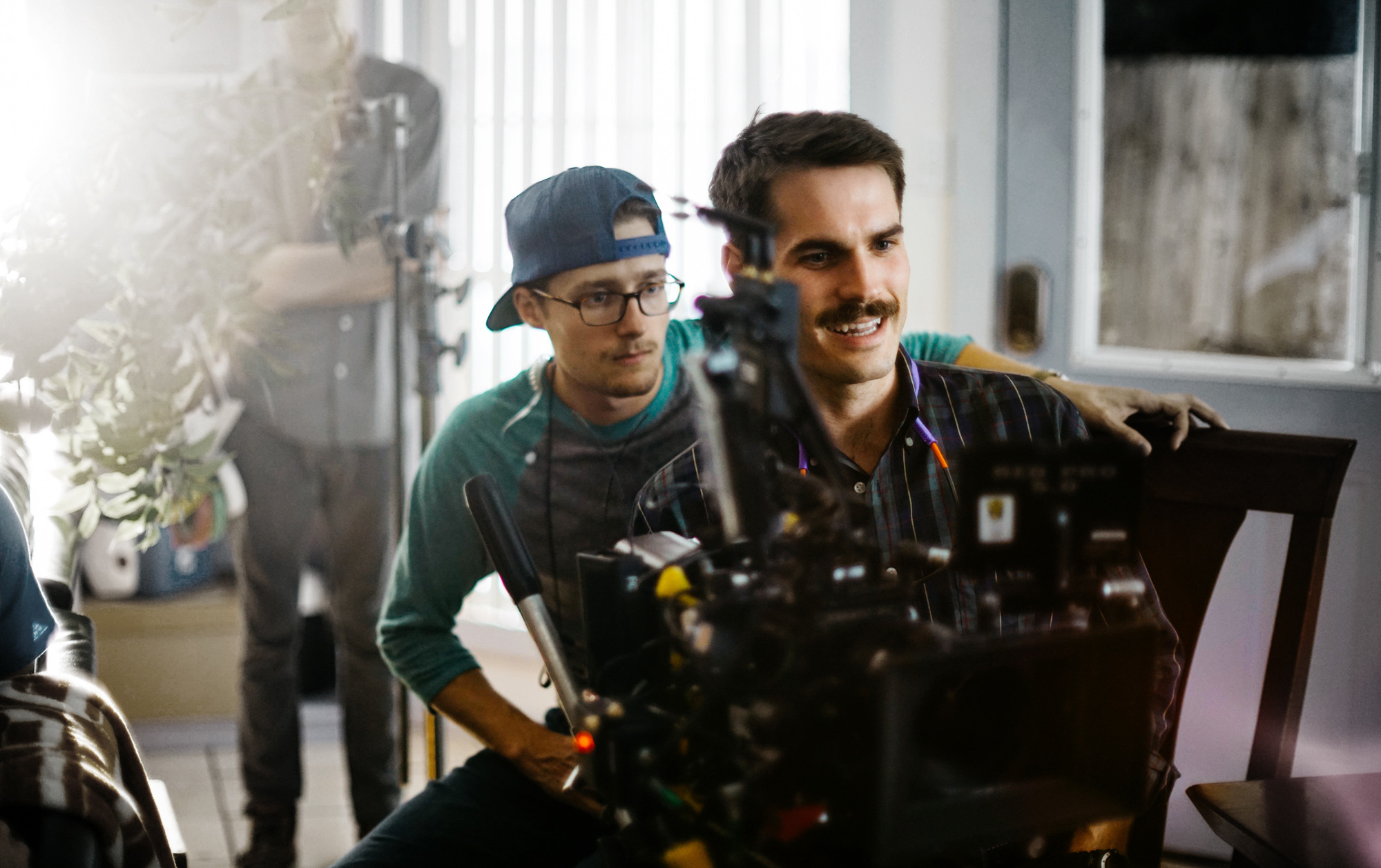
Self-Distribution
Why did you decide to self-distribute Thunder Road?
It started as a joke. Literally, we were walking down Sixth Street in Austin after winning South by Southwest and we were having conversations with distributors, these people whose only job it is to find culturally and socially significant movies and distribute them. They were saying stuff like, “Yeah, you know, it’s great winning South by Southwest, but if you get into Cannes that’s an even bigger deal. So best of luck and let us know.”
It was just the rudest thing people had ever said to us. So, it started as a joke, where we said, “Somebody is going to say ‘fuck this’ and they’re going to win one of these big festivals and put it out themselves — change stuff.” I didn’t think it was going to be us at the time.
What pushed you over the edge?
We read two case studies. We read the Columbus case study from Sundance about how they self-distributed. The movie cost $750,000 and they were able to recoup $650,000 of it in the first year and retain ownership. Then, I saw my buddy Joe Penna, who made a film that got a Cannes Official Selection this year. He’s a YouTuber who became an influencer, got this big following, and started making this short film. Now he can literally put it on YouTube and charge fans to watch it. I think this is the way of the future, where if you build your own fanbase, you don’t need anybody. It’s becoming democratized. Anybody can do this. There’s this ubiquitous misconception that self-distribution means you’re going to be selling DVD copies out of your car.
What was your strategy for Thunder Road’s release?
I have a relatively small but thorough marketing background of how to market a feature film because I was a producer for eight years. I worked my ass off trying to get people to see movies that were less interesting than mine, so we had a few different strategies.
We applied to the Sundance Creative Distribution Fellowship and got it. They gave us a grant of $33,000 to distribute, and with that money, we’ve been distributing the film through Quiver which is an aggregator for iTunes and Google Play, Netflix and all of that.
I edited the trailer myself and we reached out to Aphex Twin to use his song in the trailer. Within three weeks of doing that the trailer was on Facebook and got 180,000 views. We’re also dropping some ad dollars on people who like King of the Hill and also Manchester by the Sea — also Danny McBride and Will Ferrell — because that’s the kind of impression the trailer gives off. We are using free platforms like Facebook, Vimeo, and YouTube to find an audience that way.
The most eyeballs we got was on our Reddit post. I posted a picture of me at the Raleigh Theater. I was pointing at the poster and it was this proud moment for me, you know, I’ve been dreaming of having my movie in a theater since I was 12. Well, 117,000 people upvoted it and I think we had a million views on the picture that day, then I posted the trailer the next day and it got to the front page too. It was completely free and we got 250,000 people to see the trailer organically.
You do not need gatekeepers to approve of you before you can reach your audience. If you say you don’t need them and you just go your own way, the audience will support you.
Closing Thoughts
Do you think independent filmmakers have misconceptions about making a feature?
It’s all bullshit — all of this stuff that says in order to make a movie you need a million dollars, this union crew, all of that stuff. It’s all scare tactics to keep people out of the club. You just have to realize there is no club. The only way the system has remained as predatory as it has it because they intimidate people. They make people feel like their movies aren’t going to be good enough if they do it themselves. It’s this weird cult and the termites have spread so far into the mind of independent filmmakers that there’s no encouragement to make independent films. It’s 2018. It’s a war of attention and you can make a better movie than the studios can.
I get really happy about it. You do not need gatekeepers to approve of you before you can reach your audience. If you say you don’t need them and you just go your own way, the audience will support you. They support your independence. This is America. We love independence. We took a big risk and it has been paying off like gangbusters. It also helps that the movie is pretty good." https://blog.musicbed.com/articles/war-of-attention-jim-cummings-guide-to-making-a-feature-film-on-your-own/311

Well, yes, that's important too.  That the movie is pretty good!


Wednesday

The DIY Film Festival joins Film Freeway!

Long live the DIY Filmmaker!


As mentioned, we've become a completely online film festival, and we are now in our 16th year!


Withoutabox has announced they're no longer going to be in the film festival business after the end of this season, so we will be migrating our festival to the FilmFreeway website to handle all submissions. Starting on June 1st, 2019, this will be our new address: https://filmfreeway.com/TheDIYFilmFestival


Meanwhile... we have a slate of films that have come in from around the globe, and we're very excited here at the DIY Film Festival to present them to you.


This is reminding everyone know that February is the last month to submit a film to our 2018 festival.  The absolute drop dead deadline is March 15th, 2019 - after that the finalists will be notified, and the winners announced after by the end of the month.

PREVIOUS WINNERS INCLUDE:


Pinnacle is our main sponsor, along with 
our sponsor: FILMHUB.COM (previously KinoNation) which has distribution via many online outlets!


It's been a thrill to see new films from across the planet - we've had features in from Pakistan, from Iran, from Israel, from Ukraine, from India, from China, from New Zealand, Australia, Canada... we've had students from across the globe submit films to the festival...

Some of the winners have gone on to fame, including a festival favorite Cody Blue Snider who is directing commercials and making his feature film debut.  He blew the festival crowd away with his first short "All That Remains" which was an early festival winner...


 and has gone on to make the amazing April Fools Day which is worth sharing as well.... (considered by some pundits as one of the best short comic film made; check it out below) (Our pal Cody Blue has also made a film about the water protectors at Standing Rock)


Fool's Day Directed by Cody Blue Snider from Delirio Films on Vimeo.


We at the DIY Film Festival support DIY filmmakers on all levels, and are eager to dive into the latest films that have arrived for us to present to you.

Rock on Filmmakers!!!

Monday

Call for Entries!

"Film will only become an art when its materials are as inexpensive as pencil and paper." 
Jean Maurice Eugène Clément Cocteau (5 July 1889 – 11 October 1963) French poet, novelist, painter, and filmmaker.

The DIY Film Festival is now in its twelfth year.  Hooray!

A festival that's dedicated to highlighting "do it yourself" filmmaking, we've been honored to be part of this totally independent movement.  Some of the films we've seen have been part of Kickstarter campaigns, some have been financed by friends and family, and many have been created under the auspices of a film school.

We've also seen films from across the globe; this past year's winners included films from Uganda and Ukraine - and their films tell fresh new stories from the point of view of people living in far flung places across the globe.  Film is a universal language, and whether it's shot in the streets of India, or the streets of Manhattan, the one thing these filmmakers have is a burning desire to tell a story.

We've had the great opportunity to honor documentaries from around the globe - this past year's winning documentary was shot in Antarctica over the course of an entire year.

Here are some notes on the winning films and the finalists from this past year's festival:

DOCUMENTARY
Director Keith Reimink
Keith Reimink decided to head down to Antarctica with his Canon Vixia to see what he might be able to discover "down under."  His film is haunting and amazing.


DOCUMENTARY SHORT
Directed by Matthew VanDyke
Festival winner Matthew VanDyke's haunting portrait of the war in Syria told by two people who are in the midst of it.  The idea of being able to film under such circumstances is pretty astounding, but the heartbreaking visuals of what's happening now in their country is hard to turn away from.  


DRAMATIC FILM FEATURE
Directed by John Adams and Toby Poser
John Adams and Toby Poser have taken DIY Filmmaking to a different level - they enlist the acting talents of their kids while making these moving portraits and telling compelling stories.  The images are beautiful, the characters rich and full of development, and the stories are worth checking out.

DRAMATIC FILM SHORT
Directed by Tyler Bodamer
Tyler Bodamer's haunting portrait of a love affair - with a boy who is trying to find roots in a rootless world, and a girl trying to find her own way on the planet - he creates a haunting portrait of a time and place where two young lovers can find each other.

WORLD CINEMA FEATURE
Directed by Jeremy Etienne and Julienne Rathore (India/Norway)
This film was shot on the streets of India using local kids telling their own compelling story.  A film that looks like it must be a documentary, but is actually great story telling, is reminscent of the films of Satijat Ray, the great Indian filmmaker who also filmed on these same streets.

JURY PRIZE
Directed by Krista Imbesi (Uganda)
Moving and compelling portrait of people working in Uganda to help those that have been neglected by society.  This documentary takes the viewer into the huts and homes of these people, and leaves an indelible impression not easily forgotten.

WORLD CINEMA SHORT
Directed by Mariia Ponomarova (Ukraine)
Mariia Ponomarova is a filmmaker working in Ukraine, telling unusual and fun stories of everyday people.  Her directing style and artistic sense is evidenced in this unusual tale about a train stopping on a snowy afternoon.

COMEDY FILM
Directed by Godefroy Ryckewaert
This is just a really fun comic take on the idea of a local man who decides to become a super hero.  Last glance, Godefroy had taken down the link to the full film, but hopefully the trailer is still available.  Short but very funny.

MOCUMENTARY
Directed by Chris R. Wilson and Zacharia Persson
Former DIY Fest winner Chris Wilson is at it again.  He brings a decidedly surrealistic sense of humor to his filmmaking, and this mocumentary, pretending to be a documentary about some guys trying to think up of a plot for a film, but filming the actors who come in for an audition when there is no script, is firmly out of left field.  

STUDENT FILM
Directed by Eric Hayes
A stylish look at an unusual hit man.

ANIMATION
Directed by Ari Grabb
A fun romp into the mind of an offbeat filmmaker with an eye towards cutting edge animation.

Congratulations to all of you filmmakers for finishing your film. 

Here are some novel ways to find DIY Distribution: 

KinoNation (which puts it onto Itunes) there are many creative ways to get your work in front of an audience, and to also get your money back from making your film.
CreateSpace (which then puts it onto Amazon) 

However, it's important to remember, we don't always pick up the paint brush to pay the rent; sometimes we're compelled to pick up the brush, to approach a blank canvas with our heart in our hand, to try and express ourselves in a way that only we can accomplish.  It takes courage to dip the brush and face the canvas; there's no time like the present to make that effort!

Thursday

Call for Films!

"Film will only become an art when its materials are as inexpensive as pencil and paper." 
Jean Maurice Eugène Clément Cocteau (5 July 1889 – 11 October 1963) French poet, novelist, painter, and filmmaker.

The DIY Film Festival is now in its twelfth year.  Hooray!

A festival that's dedicated to highlighting "do it yourself" filmmaking, we've been honored to be part of this totally independent movement.  Some of the films we've seen have been part of Kickstarter campaigns, some have been financed by friends and family, and many have been created under the auspices of a film school.

We've also seen films from across the globe; this past year's winners included films from Uganda and Ukraine - and their films tell fresh new stories from the point of view of people living in far flung places across the globe.  Film is a universal language, and whether it's shot in the streets of India, or the streets of Manhattan, the one thing these filmmakers have is a burning desire to tell a story.

We've had the great opportunity to honor documentaries from around the globe - this past year's winning documentary was shot in Antarctica over the course of an entire year.

Here are some notes on the winning films and the finalists from this past year's festival:

DOCUMENTARY

Director Keith Reimink

Keith Reimink decided to head down to Antarctica with his Canon Vixia to see what he might be able to discover "down under."  His film is haunting and amazing.


DOCUMENTARY SHORT

Directed by Matthew VanDyke

Festival winner Matthew VanDyke's haunting portrait of the war in Syria told by two people who are in the midst of it.  The idea of being able to film under such circumstances is pretty astounding, but the heartbreaking visuals of what's happening now in their country is hard to turn away from.  


DRAMATIC FILM FEATURE

Directed by John Adams and Toby Poser

Directed by John Adams and Toby Poser

John Adams and Toby Poser have taken DIY Filmmaking to a different level - they enlist the acting talents of their kids while making these moving portraits and telling compelling stories.  The images are beautiful, the characters rich and full of development, and the stories are worth checking out.


DRAMATIC FILM SHORT

Directed by Tyler Bodamer

Tyler Bodamer's haunting portrait of a love affair - with a boy who is trying to find roots in a rootless world, and a girl trying to find her own way on the planet - he creates a haunting portrait of a time and place where two young lovers can find each other.


WORLD CINEMA FEATURE

Directed by Jeremy Etienne and Julienne Rathore (India/Norway)

This film was shot on the streets of India using local kids telling their own compelling story.  A film that looks like it must be a documentary, but is actually great story telling, is reminscent of the films of Satijat Ray, the great Indian filmmaker who also filmed on these same streets.


JURY PRIZE

Directed by Krista Imbesi (Uganda)

Moving and compelling portrait of people working in Uganda to help those that have been neglected by society.  This documentary takes the viewer into the huts and homes of these people, and leaves an indelible impression not easily forgotten.


WORLD CINEMA SHORT

ICE CREAM
Directed by Mariia Ponomarova (Ukraine)

Mariia Ponomarova is a filmmaker working in Ukraine, telling unusual and fun stories of everyday people.  Her directing style and artistic sense is evidenced in this unusual tale about a train stopping on a snowy afternoon.


COMEDY FILM

Directed by Godefroy Ryckewaert

This is just a really fun comic take on the idea of a local man who decides to become a super hero.  Last glance, Godefroy had taken down the link to the full film, but hopefully the trailer is still available.  Short but very funny.


MOCUMENTARY

Directed by Chris R. Wilson and Zacharia Persson

Former DIY Fest winner Chris Wilson is at it again.  He brings a decidedly surrealistic sense of humor to his filmmaking, and this mocumentary, pretending to be a documentary about some guys trying to think up of a plot for a film, but filming the actors who come in for an audition when there is no script, is firmly out of left field.  


STUDENT FILM

Directed by Eric Hayes

A stylish look at an unusual hit man.

ANIMATION


Directed by Ari Grabb

A fun romp into the mind of an offbeat filmmaker with an eye towards cutting edge animation.

Congratulations to all of you filmmakers for finishing your film.  Find a way to get it out in front of the public, whether distribution, or self distribution, or finding a way to put it out through CreateSpace (which then puts it onto Amazon) or KinoNation (which puts it onto Itunes) there are many creative ways to get your work in front of an audience, and to also get your money back from making your film.

However, it's important to remember, we don't always pick up the paint brush to pay the rent; sometimes we're compelled to pick up the brush, to approach a blank canvas with our heart in our hand, to try and express ourselves in a way that only we can accomplish.  It takes courage to dip the brush and face the canvas; there's no time like the present to make that effort!


Monday

Withoutabox outage

Hi DIY Filmmakers, apparently Withoutabox had a glitch, and films that were submitted between Oct 25th and Nov 2nd were lost in the path of Hurricane Sandy. Here's the email we got this morning from our partners at WITHOUTABOX.COM:


Dear Withoutabox Customer


  On November 1st, our site experienced an outage which unfortunately resulted in the loss of data submitted from the afternoon of October 25th to the evening of November 2nd. You have been identified as a customer whose data was affected by this outage. Any changes made to your account during this time will need to be resubmitted; additionally, any submissions made during this time have been unintentionally deleted from the system.

Wow. Where did they get their tabulating machines from; Ohio?
Flavio Parenti accepted his award from Rome at last year's fest.
No glitches happened here.

Now, they may just be referring to films that individual filmmakers might have submitted (hence why its addressed to customer and not "film festival") - and if you submitted a film and you got this email from them, then you might look into it.

If we read this correctly it seems to imply if you submitted your film between the 25th and the 2nd, they have no record of it.  However, if your film finds its way to our PO Box in Santa Monica (DIY Film Fest, PO Box 248, Santa Monica, 90406) we will contact you if we can't find you in the withoutabox system (our chosen method for film submissions).  So not to fear, no need to resubmit - hopefully your DV has an email address/contact number that we can access and get in touch with you if there's a problem.

If you don't hear from us, you can contact us anytime at DIYFilmFest@yahoo.com - sorry for the glitch, but what can you do? Glitch Happens. 

If you did receive a notice from Withoutabox letting you know your film was entered, no need to worry, no stress, you're "in consideration" as they call it.  If you have submitted your film to our festival and not received a notice, please email us at DIYFilmFest@yahoo.com and include the Withoutabox submission entry #.  Thanks.


DIY Fest Winners from 2011. Not a glitch among them.
And please, on behalf of all those who fought for our rights: don't forget to vote!

Wednesday

2013 CALL FOR ENTRIES


2013 DIY FILM FESTIVAL CALL FOR ENTRIES!!!

DIY Book and Film winners at the Gala last March
HOLLYWOOD, Ca. (Sept. 25, 2013) _ The 2013 DIY Film Festival is now accepting entries for its 11th annual awards and screening series, part of the 2013 DIY Convention: Do-It-Yourself in Film, Music & Books in Los Angeles.


The DIY Film Festival honors the best of independent and self-produced films. Past winners have been able to get their films on Showtime and some have found a theatrical release. Submissions are accepted from countries around the world, culminating in our annual awards in Hollywood at the Roosevelt Hotel, home of the first Academy Awards.

Submissions to the 2013 DIY Film Festival must have been released after Jan. 1, 2011 and have been produced without multinational corporate backing. 
Categories include:
Cara Feinberg Accepting her award

Dramatic or Comedy or Documentary Features (over 30 minutes in length)
Dramatic or Comedy or Documentary Shorts (under 30)
Animated features and shorts
Student films, Experimental Films and/or Mocumentaries.

Winner Flavio Parenti accepting from Rome
Entries will be judged using the following criteria:

1) The sophistication and potential of the film to reach a larger audience; and

2) The unique use of DIY production tools to tell a compelling (dramatic or comedic) story that perhaps breaks boundaries of traditional story telling.

Information on the event and entry forms can be found at www.DIYConvention.com, www.diyfilmfest.com or submitted through Withoutabox.com
Comedian Deep Roy accepting an award
Site of the First Academy Awards

The films should follow the paradigm of "Do It Yourself" filmmaking. This means no film studio or major corporation financed your film. We're a film festival that highlights and focuses on the ability to tell a good story, a moving story, an interesting story using the tools that are available to everyone. That being said, it's up to you how professional your film looks, or your story is. 

We firmly believe in artist Jean Cocteau's maxim "When the cost of making films is as much as a pencil and piece of paper, then we'll find true art."

Monday

Toronto, Sundance, Cannes, DIY Film Distribution

Hello DIY Filmmakers,

Just a few words about Toronto's film festival, upcoming deadlines for Sundance and the Cannes Film Festival. (further details check: withoutabox.com) and a few words about DIY distribution in general.

Aim high!

Shoot the moon. Why not?
You don't really know who's going to respond to your work and in what fashion.  So if you can afford to, get it out there, see if you can get into these premiere film fests.  Toronto is a wonderful venue for international attention, Sundance is the premiere festival in the US (along with Slamdance, South by Southwest, Santa Barbara, Palm Springs short, NY Film Fest, Indie Spirit Awars etc), and Cannes of course, is Cannes.  Look at your film with the jaded eyes of a festival programmer - and then find the right fit for your story.

This cat wants to eat your film.
Just leave it lying around
undistributed.
And then after you've been the festival route and due to myopia of festival programmers, still don't have a place for your film, think about self distribution.  It's the way of the future for filmmaking - and as filmmakers get frustrated trying to get films into the studio pipeline, or the indie pipeline, or any pipeline other than a pipeline to the ocean - they'll see how DIY distribution can make you the filmmaker happy, make your audience happy, and make a name for yourself, as well as at least a modicum of income.

Here's one way to do it, it's not for everyone, but if you're tired of waiting for Godot to show up and anoint your film worthy of studio attention, here's one way to do it.  We at the DIY Film Fest have seen a number of folks pursue this avenue, and while it's no guarantee of profitability for your film, it does grant a certain amount of satisfaction in a world where there's little of it in artistic pursuits.

an indie filmmaker's dream actor
We at the DIY Film Fest believe in do it yourself filmmaking, do it yourself publishing, do it yourself music - doing what you feel comes natural and then getting it out there for others to appreciate.  Your audience will find you if you let them.


Finish your film in the best way that you can, screen it for friends so that you can experience what they experience when viewing it. "Kill all your darlings" meaning edit the film until its not just good but really good.  And you feel it can't be edited any longer.  Add some great music, there are many bands that will let you use their music on your film in return for credit or future compensation ("if the film is sold to a distributor, you will be paid as per BMI or ASCAP rules) or look for some great classical music that is inexpensive to license.  Music can make or break your film.  You've already paid attention to the visuals, to the sound and dialog, make sure the music moves your audience as well.

Then figure out where you want to show your film.  If its itunes, you need an aggregator.  They cost money, unless you find one like Ted Hope's new KinoNation, which if they take on your film, don't charge to sell it through to the various VOD sites.  You can save thousands using their service - otherwise you need to hire one of those listed in the link to get onto Itunes.

There's also Amazon, which is one of the most visited sites per day in the world.  The way to get your film onto Amazon is to use their createspace.com service - they have templates and easy instructions on how to send a DVD of your finished film, as well as help you to build your artwork.  You can do all of it for free if you want to. The only caveat is that if you purchase an ISBN yourself, if you resell the film to another entity, you continue to use your own title, if you use their ISBN then you have to rename the film for an alternate sale. Once they have the DVD they stream it live - all funds go monthly into your account.

What happens to those who steal films via Torrent
Yes, there's a problem if someone uploads your film to Torrent.  But if you've made a good film, and give people the option on your website to pay for it - even a paypal donut that says "if you've seen my film and not paid for it, please donate something."  But see pic to the left as to what happens to those who don't.

But that aside, you set the price, and then Amazon takes their cut.  It's around 55% to your 45% - but considerably better than a studio percentage.  Once you have the film packaged and online, then the next most important way to reach your audience is marketing and publicity.  Can you do that yourself?  Sure, if you have the time and inclination and imagination.  Many folks hire a publicist, or hire a marketing consultant - it's something you can find online.  There's also the PayPal way to go - once you have a paypal account, you can purchase a Merchant Services option which allows you to build their code onto your website.

You do have a website for your film,don't you?  If not, build one for free - get a gmail account, then use their very simple blogger software - build your site, then add HTML or links to purchase your film on your site - either via amazon, itunes, or paypal - where you can design in the paypal merchant button a link that takes your audience to another site to download your film.  You're only limited by your imagination.

Remember not to sign away any of the rights to your film without really understanding what the contract says.  There are some people who agree to represent your film, then take a huge percentage of your profit, and you'll never see a dime.  They've resold your film to another aggregator, and getting money from that sale is next to impossible.  If you can sell it yourself, then you're ahead of the game. (Can anyone say attorney?)

The most recent success story in that regard is Louis CK's wildly successful one man show.  He did a show at the Beacon in NY, paid for it himself (around $200K) and then put the film out on his website for $5.  The web protocol he used was the Amazon Cloud - with payments going direct to his PayPal account - so that once it resides in the cloud, he gets charged a nominal fee for every download.  In 30 days, he'd made a million dollars with his film - the first month alone!
Louis CD's PayPal page showing his million dollars in sales in one
month!  Can't make money with your film unless you get it out there.


Of course he's got a built in audience, he's got fans, he's got a good show that everyone wants to see - but he made it simple for them to find it, he did it himself.  At the moment, it's the DIY story of the year.  And why would filmmakers waste their time with theaters when they know full well that a theater is not going to show their off beat, particular film?  Why not bypass all that and just offer it directly to the audience?


So that's it for now from the DIY Film Fest.  We believe in Cocteau's observation that "when the cost of filmmaking is as much as a pencil and a piece of paper, then we'll find true art."  That time is now.


Film Festivals

Special thanks to those who attended our summer fest at Flying Saucer's in Santa Monica.  Ryan, the owner of the art gallery and cafe shared some amazing stories about his website and fan club. Special thanks to Bruce Haring, Janna, and James who also made the evening more fun that a box of sock puppets.  Whatever that means! And our thanks to Vidiots, one of the oldest and most unique video outlets in Los Angeles but who have a state of the art projection system.

Some important deadlines are looming for film festivals worldwide.  Check 'em out at WithoutABox.com - where you can find listings for just about every film festival on the planet.  Happy summer everyone!  Keep flying your DIY flag high!

Here's an article in the UK's guardian that is championing the concept of DIY filmmaking!

The DIY films that vanish without trace

For every Morris: A Life with Bells On that enjoy success, there are countless DIY labours of love that will never find an audience. So why are the studios ignoring Britain's burgeoning indie film industry?
Too niche? … Morris: A Life With Bells On
Here on my desk, hemmed in by coffee mugs and dwarfed by the computer screen, sits a stack of DVDs: the equivalent of a publisher's slush of unsolicited manuscripts. So far as I can gather, each disc contains an independent, DIY British motion picture. DIY in that it is bereft of a studio and distributor; independent in the sense of being an orphan. And as they mount up, these discs start to pose a conundrum. There are simply too many of the things to sit through, and only so much mileage in writing about films that nobody can actually go and see. So they sit there silently, taunting me.
  1. Morris: A Life With Bells On
  2. Production year: 2009
  3. Country: UK
  4. Cert (UK): 12A
  5. Runtime: 101 mins
  6. Directors: Lucy Akhurst
  7. Cast: Charles Thomas Oldham, Greg Wise, Naomie Harris, Olivia Colman, Sir Derek Jacobi
  8. More on this film
Sometimes, against the odds, one of these orphans will break out of the slush pile. Last Sunday saw the release of Morris: A Life With Bells On, an amiable mockumentary about an avant-garde morris dancer who finds fame on the California folk circuit. The film was made on a budget of £500,000 by the husband-and-wife team of Lucy Akhurst and Charles Thomas Oldham, who describe it as "a nice film about good people". On its opening day, it racked up a higher take per screen than The Soloist, a studio-backed Oscar contender starring Jamie Foxx and Robert Downey Jr.

Morris is a breakout success story, an underdog made good. Except that it almost didn't pan out that way. After completing the picture, Akhurst and Oldham laid on screenings for the major UK distributors. None of them would touch it. They said it was too small, too niche. Many of them walked out just 10 minutes into the movie. "That was horrible," Akhurst remembers. "That just kills you."

What saved Morris was a trip to the countryside: they organised a tour around the village halls of south-west England, where their film became a word-of-mouth hit. That allowed its makers to bypass the distributors and go straight to the exhibitors. Morris was finally picked up by the Picturehouse cinema chain, which agreed to roll it out on wider release, beginning last week.

So Akhurst and Oldham are entitled to feel vindicated. They argue that the distributors missed a trick by passing on Morris. The industry is too blinkered, they say, too London-centric; too intent on chasing an illusory 16-24 demographic at the expense of an untapped older audience in the regions.
The paradox here is that a gentle, old-fashioned indie may well be the riskiest indie of them all for the industry – if not the audience. "Nobody is thinking of the audience," says Akhurst. "The general public goes to the cinema to be entertained, whereas the people in the industry are looking for something different. It's the equivalent of someone who works in the wine trade. They want some difficult, faecal rioja as opposed to a decent, buttery chardonnay." And by this, she means the critics as well as the distributors.

Oldham agrees. "I never saw Morris as a high-risk project," he marvels. "We pitched this as Spinal Tap meets The Full Monty by way of Calendar Girls, and you can't get more mainstream than that. But the problem is that the film celebrates a part of England that rarely gets celebrated. Maybe the industry needs to take its Soho hat off."

Akhurst and Oldham decided against entering Morris on the festival circuit, partly because it costs too much to do so, partly because it is not an obvious festival movie ("It would be like entering Mamma Mia! at Cannes"). Then again, the festival scene no longer provides the reliable launchpad it once did. Last month's Toronto film festival was described by one commentator as "an indie bloodbath", as the recession forced many independent producers to sell their wares for next to nothing.

Here in the UK, the Raindance film festival (which kicked off on Wednesday) at least remains something akin to a safe haven. Elliot Grove, who founded the event in 1993, explains that there are 11 homegrown DIY features in this year's line-up, up from six or seven in previous years. The most notable of these is Colin, a British zombie movie reported to have had a budget of just £45. Its director, Marc Price, says he made it in part to inspire other wannabe film-makers; to make them think: "If this arsehole can do it, I can do it."

Grove insists this is actually a good time for DIY cinema. Quality is up, and the cost of making movies is down. Even so, he sees few signs of a commercial breakthrough for any of the movies. "You have to remember that 96% of cinemas are controlled by the studios, and the studios don't want to show films they haven't made. But it works the other way, too. Ask the public to choose between two films – a glossy Hollywood one and an unsung British one – and nine out of 10 will go for the Hollywood one. That culture is not about to change. Independent film is always going to be niche."
At this point I decide I have been taunted for far too long. The DVD stack is still sitting among the coffee mugs, gently gathering dust. There is only one thing for it. I pluck a disc from the middle and slot it into the computer's DVD player.

The film is called Behind the Scenes of Total Hell. It was made for £2,000 and, like Morris, is a mockumentary (this, clearly, is the DIY film-makers' genre of choice). Behind the Scenes follows the fortunes of an inept director, Jamie Gunn, a man "misunderstood, by himself". And guess what: it is actually pretty funny. It may also be an apt summary of the pitfalls of shooting an independent motion picture.

But what is to become of it? Its creator, Newcastle-based Andy Wilton, says he has arranged a premiere at his local cinema. After that, the film can be downloaded from his website for a charge of £2.50. It will almost certainly not be going on general release. "In hindsight, I think I was a bit naive," Wilton says. "I thought I could do it all myself, but I had no game plan. Sales agents and distributors all say the same thing: 'We won't take a film that costs less than $1m,' or 'We won't take it if it doesn't star Brad Pitt.' I thought the film would be good enough that someone would take it off my hands. But no one's bitten them off as yet."

Talk to the makers of Morris and of Behind the Scenes of Total Hell and they will sing from the same hymn sheet. The process of making movies is actually getting easier, and there are now so many more platforms to screen them on. Yet there is no overriding strategy, no distribution system to knit it all together. A crucial piece of the jigsaw appears to be missing.

Back in London, Liz Rosenthal runs Power to the Pixel, an organisation that aims to help independent film-makers navigate a changing, digital terrain. The business, she says, is in a mess. "It's the classic best of times/worst of times. There is now an infinite space to show your work, and the film industry is an old business model, desperately trying to catch up. If you are a traditional distributor, it costs a lot to release a movie, so obviously they want to go with what they know and think is low risk. Every film-maker still wants a theatrical release, but there are thousands of films being made. They can't all expect to find a space."

Rosenthal feels the problem lies as much with the independent British film-maker as it does with the distributors. "Getting films out in the world has always been harder than actually making them," she says. "But people still have the tendency to think, 'Oh, I make films and that's that.' You can't just finish a film and think, 'Here it is. Take it off my hands.' The best independent film-makers don't just make a film in isolation; they are an integral part of the entire process. They build a fanbase and target an audience. They form groups and communities. And that's not being tawdry: that's being creative." One might also argue that it is part and parcel of being independent: a focus group, film-maker and push-button publisher rolled into one.

In the meantime, the world premiere of Behind the Scenes of Total Hell is set for next Sunday at the Tyneside cinema in Newcastle. This, coincidentally, is the same venue at which Jamie Gunn's disastrous film-within-a-film received its own unveiling. A handful of people showed up, the movie was derided and the director carted off to a psychiatric institution. One hopes for a better outcome for Wilton's mockumentary. But who can say? It wouldn't be the first low-budget, British independent film to die a quiet, lonesome death. Sure as hell, it won't be the last.